DÃa Mundial del Banco Público
A day for the humble places where strangers rest, elders talk, children wait, and towns quietly reveal themselves.
Kuwait Edition
World Public Bench Day leads today's complete edition for Kuwait.
Daily Edition
Official observances, world days, local context, and everyday celebrations for people who need something worth reading, sharing, or talking about today.
A day for the humble places where strangers rest, elders talk, children wait, and towns quietly reveal themselves.
Haz un balance de tu familia. Esta es la semana en la que hablas con los miembros de mayor edad para registrar su historia, conversar sobre su infancia, conocer sus experiencias y grabar su voz para las futuras generaciones. Y si tienes la fortuna de ser un mayor de la familia, esta es la semana en la que abres tu corazón y tu mente para preservar tu historia.
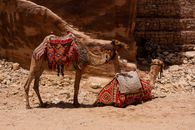
A day celebrating the Bedouin heritage of Kuwait, where the desert (badiya) is not just a landscape but a way of life. The Bedouin tribes of Kuwait (the Mutair, the Awazim, the Rashaida, and the Huwala) have lived in the desert for centuries, moving with their camels and goats from winter grazing to summer shade. The day is marked by camel races at the Kuwait Camel Racing Club in Kabad, falconry demonstrations in the desert, and the preparation of traditional Bedouin food: mathrooba (a thin bread porridge), machboos (spiced rice with meat), and gahwa (Arabic coffee brewed with cardamom and saffron). The desert is the soul of Kuwait, and the Bedouin are its voice.

A day for making room at the table when one more person shows up.
A day for leaving early, finding the route, watching the platform, and giving everyone a little room.
You spot the Arabian oryx, Nubian ibex, and desert leopards that navigate Jordan's arid wilderness and rocky terrain. You find that Jordanian families typically keep dogs, cats, and pigeons, with some keeping Arabian horses. ACADA celebrates the world's pets, and helps assure better care.
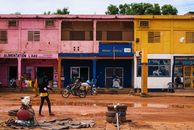
You discover Bogolan (mud cloth) with its hand-dyed geometric patterns and Malian gold, which represent West African artistic mastery and mineral wealth. You recognize how Bogolan especially carries spiritual and social significance in Malian communities, with each pattern telling stories of identity and heritage.