Iran Edition

March 20, 2027

Eid al-Fitr leads today's complete edition for Iran.

THIS DATE IS IN EDITING AND IS INCOMPLETE. Our editors are building this day's calendar now. JOIN OUR EDITORS →

Daily Edition

Saturday, March 20, 2027

Official observances, world days, local context, and everyday celebrations for people who need something worth reading, sharing, or talking about today.

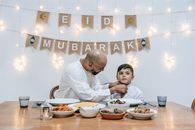
A father adjusts his son's shirt as they sit together celebrating Eid indoors with festive lights and food.
World Calendar Day

Eid al-Fitr

The end of Ramadan. In Iraq, the celebration begins with the Eid prayer at the mosque, followed by family visits, new clothes, and the distribution of Eidi (gift money) to children. The Iraqi Eid table includes kleicha (date-filled pastries), and every family has a recipe that is better than their neighbor's. The kleicha debate is the Iraqi equivalent of the bagel debate: round or flat, date or walnut, and the correct answer is whatever your grandmother made. . 2026: Mar 31. 2027: Mar 20.
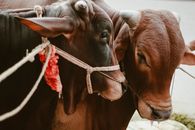
Two cattle tied together at a market in Dhaka for Eid celebrations.
Regional/Cultural Day

Eid-e Fetr

The end of Ramadan is celebrated with special prayers, new clothes, and the Eidi (gift money given to children). In Iran, the Eidi is given in crisp new bills, and the children calculate their earnings with the focus of accountants. The mosque is full, the food is abundant, and the fasting is over. The relief is physical and spiritual. . 2026: Mar 31. 2027: Mar 20.

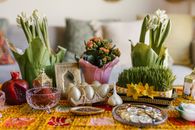
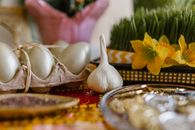
A vibrant Haft Sin table setup with symbolic items for Nowruz celebration.
Regional/Cultural Day

Eidi-ye Nowruz

The Eidi is the cash gift that elders give to children during Nowruz. The bills must be new and crisp, preferably in a sealed envelope, and preferably in odd numbers (which are considered lucky). Children calculate their total Eidi earnings with the precision of tax accountants and the greed of loan sharks. A child who collects 500,000 tomans in Eidi is rich. A child who collects 200,000 is respected. A child who gets nothing pretends they did not want it anyway.

A vibrant arrangement of Nowruz haft-seen elements featuring greenery, flowers, and traditional items.
Regional/Cultural Day

Haft-sin

The Haft-sin is not decoration. It is cosmology. Each of the seven items represents a principle: sabzeh is rebirth, samanoo is affluence, senjed is love, seer is medicine, seeb is health and beauty, somaq is sunrise, and serkeh is age and patience. The goldfish represents life, the mirror represents self-reflection, and the candles represent light. The table is set a week before Nowruz and remains for 13 days. It is the most photographed object in Iran. . Fixed, Mar 20.

A vibrant Haft Sin table setup with symbolic items for Nowruz celebration.
Regional/Cultural Day

Nowruz

The most important holiday in Iran, celebrating the vernal equinox and the new year. The Haft-sin table is set with seven items starting with the letter S: sabzeh (sprouts), samanoo (wheat pudding), senjed (dried oleaster fruit), seer (garlic), seeb (apple), somaq (sumac), and serkeh (vinegar). The table also includes a mirror, candles, painted eggs, a goldfish, and a copy of the Quran or the Divan of Hafez. The moment of the equinox is calculated to the second, and families gather around the Haft-sin table to greet the new year at the exact moment it arrives. . 2026: Mar 4. 2027: Mar 23.

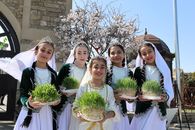
Five young girls in traditional attire holding Sabzeh, celebrating Nowruz outdoors under cherry blossoms.
Regional/Cultural Day

Nowruz Travel

The two weeks around Nowruz are the biggest travel period in Iran. Every Iranian who can leave their city does, and the roads are jammed. The destination is usually the family home in the provinces, where the grandparents have been preparing for weeks. The journey is long, the traffic is terrible, and the arrival is always worth it. . Fixed, Mar 20.

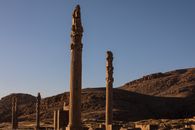
Majestic view of ancient columns at Persepolis, Iran, during sunset showcasing historical ruins.
Regional/Cultural Day

Persepolis Nowruz

The ancient capital of the Achaemenid Empire, built by Darius the Great in 518 BCE, is the site of Nowruz celebrations that connect modern Iran to its pre-Islamic past. The bas-reliefs show delegations from 23 nations bringing tribute to the king, and the apadana (audience hall) could hold 10,000 people. At Nowruz, the site is filled with Iranians who have come to remember that their civilization is 2,500 years old, and that empires rise and fall, but the new year always begins with the spring. . Fixed, Mar 20.

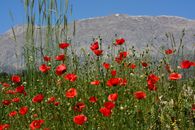
Stunning red poppies bloom in spring fields of Gömbe, Antalya against mountain backdrop.
Regional/Cultural Day

Ruz-e Avval-e Bahar

The first day of spring is Nowruz, and it is not subtle. The almond blossoms appear in the north, the streets are washed, the Haft-sin tables are set, and the entire country breathes out after the long winter. The new year arrives at a specific second, calculated by astronomers, and announced on television. Families gather around the Haft-sin, the clock counts down, and at the exact moment, everyone hugs. The hug is the point. The table is the symbol. The spring is the promise. The winter is over. The new year begins.

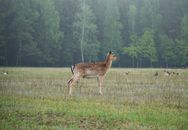
A solitary deer stands gracefully in a lush Belarusian meadow, surrounded by a tranquil forest.
Regional/Cultural Day

Animals of Belarus Day

You encounter European bison, wolves, and lynx as the most iconic wildlife native to Belarus. You commonly see cats and dogs as pets in Belarusian households, with Russian Blue cats being particularly popular. ACADA celebrates the world's pets, and helps assure better care.

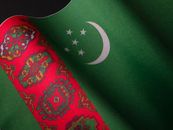
Detailed close-up of the Turkmenistan flag with its intricate patterns and vibrant colors.
Regional/Cultural Day

Products of Turkmenistan Day

You celebrate Turkmenistan's renowned hand-knotted carpets and the state-owned Balkan Sarapy brand, which represents centuries of nomadic weaving traditions passed down through generations. You recognize how these carpets are woven into the national identity, appearing in government buildings and homes as symbols of Turkmen heritage and craftsmanship.